IAF's Uber Deal: Discounted Rides or Discounted Security?
"Top secret? Not anymore, thanks to ‘Share My Ride’ tracking!"
In a plot twist straight out of a spy thriller, the Indian Air Force (IAF) has signed a Memorandum of Understanding (MoU) with Uber. Yes, Uber—the same company whose data servers are overseas and probably guarded by a guy with an American flag pin on his suit. The move is meant to offer cheaper and more convenient rides to IAF personnel, their families, and veterans.
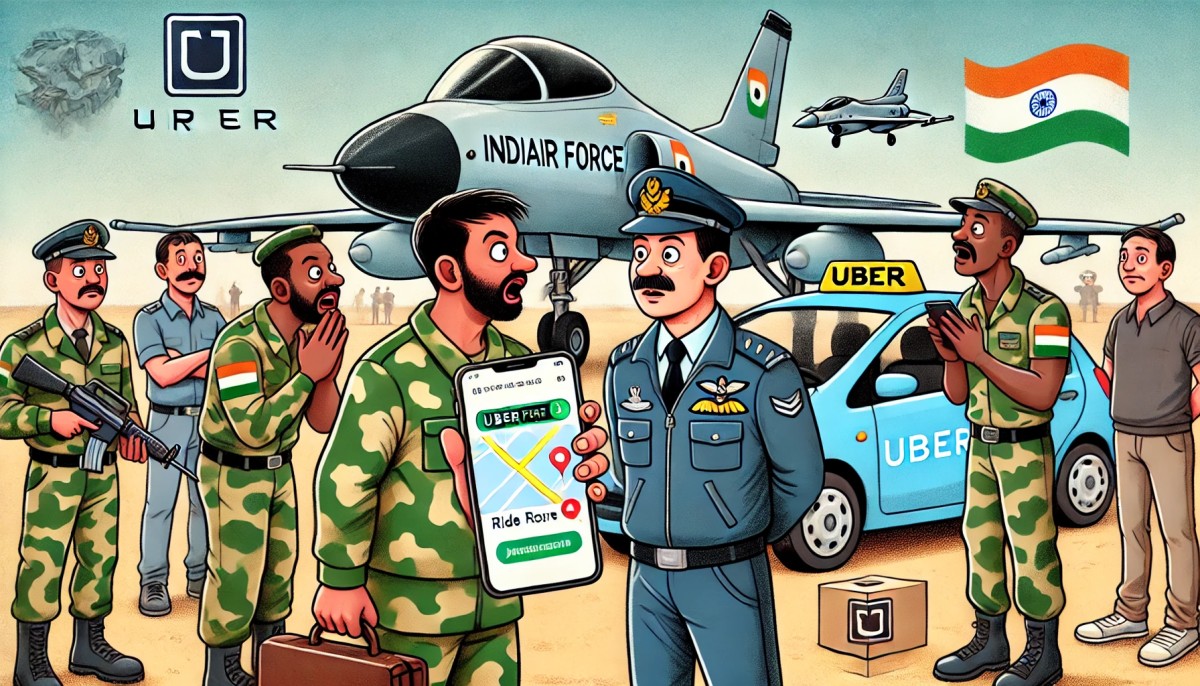
But hold on. This is the same IAF that’s famously known for hitting the “DENIED” button on almost every tech project in the name of cybersecurity. New local apps? Nope. Data-sharing solutions? No chance. “It’s too risky!” they say. Yet here we are, partnering with an app that practically lives on data collection.
Anecdote: The "Friendly" Ride that Spilled Secrets
Imagine Wing Commander Rao booking an Uber from an airbase to a confidential training site. Unbeknownst to him, someone across the ocean has a dashboard lighting up with data points showing his location and travel history. With each ride, adversaries slowly piece together a map of IAF operations. Mission compromised. And for what? A few rupees saved on cab fare.
Experts have been quick to raise the alarm. “Uber is an American company,” they remind us, with data servers under US laws. In theory, this means data on IAF movements could be requested or even hacked into. And who benefits from this? Hackers, foreign intelligence, and maybe that bored guy in a basement who just wants to know where all the cool airbases are.
The Real Question: Why Now?
Let’s be honest. The IAF, along with other branches, has spent years blocking perfectly useful tech ideas citing cyber threats. “We must protect our data!” they said. Indian startups have tried to offer solutions, but one look at the word “server” and out came the stamp: REJECTED.
So why does this particular deal get a pass? What makes Uber special? Is it the shiny app interface? The ability to see your car approach in real-time? Or is it just the allure of getting somewhere 5 minutes faster with “UberGo”? Whatever it is, it’s not sitting well with those who know how data trails can turn into data traps.
Anecdote: The Hacker’s Shopping Spree
Picture this: A hacker gains access to Uber's user data. Suddenly, they have a treasure trove of information tagged as “IAF personnel.” Now, they know who works where, their daily routes, and even their favorite coffee stops. This isn’t just bad—it’s a full-blown cyber disaster waiting to happen.
Time to Get Serious: Build Indian, Secure Indian
We have the brains and the skills. If we can launch satellites to Mars, we can create a secure, local ride-hailing app with data stored safely within India. And it’s not just about transportation—it’s about protecting those who protect us.
Security experts have one simple plea: If we’re so worried about cybersecurity when it comes to homegrown projects, we should be 10 times more cautious with foreign partnerships. Auditing data use, storing information on Indian servers, and making sure foreign companies don’t own the keys to our kingdom are not just optional—they’re essential.
So, decision-makers, before we start tracking our personnel’s next ride, let’s make sure we aren’t on a one-way trip to a massive security headache.